
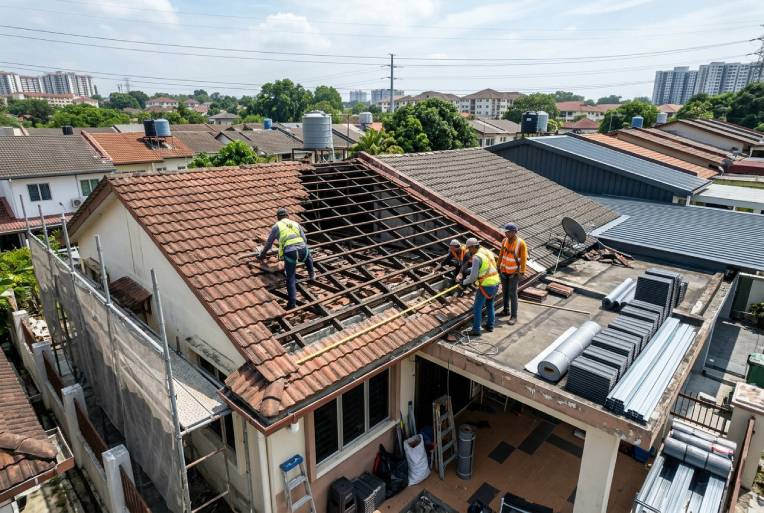
If your roof is ageing, repeatedly leaking or showing extensive damage, you may eventually start asking an important question: How much does roof replacement cost?
There is no single price that applies to every property. The final cost depends on the size and condition of the roof, the roofing material selected, accessibility, labour requirements and whether additional repairs are discovered after the old roof is removed.
For homeowners considering roof replacement Klang Valley services, understanding these factors can make it easier to compare quotations and plan a realistic budget.
Here are the main elements that can influence the final price.
Roof Size Is One of the Biggest Cost Factors
The overall roof area directly affects how much material and labour are required.
A larger roof generally requires more:
- Roofing materials
- Underlayment or waterproofing components
- Flashing and accessories
- Fasteners
- Labour time
- Removal and disposal work
However, floor area alone does not always tell you the actual roof size. Roof slope, extensions, porches and different roof sections can increase the total surface area.
For this reason, an accurate measurement is usually necessary before a reliable roof replacement quotation can be prepared.
The Roofing Material You Choose
Material selection can significantly affect the project cost. Different roofing systems have different material prices, installation methods and maintenance requirements.
Common roofing materials may include metal deck roofing, clay tiles and concrete roof tiles. Pro Home’s professional roof replacement services cover these different types of roofing systems.
Metal Deck Roofing
Metal deck roofing is commonly chosen for its durability and relatively straightforward maintenance. The final price can vary depending on the type, thickness, finish and specifications of the metal roofing selected.
Clay or Concrete Roof Tiles
Tile roofs have a different installation process. The number of tiles required, roof structure and condition of existing battens or supporting components can all influence labour and material costs.
The cheapest material is not automatically the best choice. The roof design, existing structure, expected durability and maintenance requirements should also be considered.
Removing the Existing Roof
A roof replacement usually involves more than installing new materials over the existing roof.
Old roofing may need to be carefully removed so the structure underneath can be inspected. This adds labour, handling and disposal costs to the project.
The amount of removal work depends on factors such as:
- Existing roofing material
- Number of roof layers
- Roof size and slope
- Condition of existing materials
- Ease of moving debris from the roof to ground level
Removal is also an important stage because damaged areas hidden beneath the existing roofing may only become visible once the old material is taken away.
Condition of the Supporting Roof Structure
One of the biggest variables in a roof replacement project is what lies underneath the old roofing.
If the supporting structure remains in good condition, the new roofing system may be installed after the necessary preparation work.
However, long-term leaks can sometimes damage battens, timber, metal framing or other supporting components.
If deteriorated sections are discovered, they may need to be repaired or replaced before new roofing materials can be installed safely.
This is one reason homeowners should not ignore common roofing problems homeowners should fix early. Addressing leakage and deterioration sooner may help prevent damage from spreading to other roof components.
Roof Design and Complexity
Two roofs with a similar total area can still have very different replacement costs.
A simple roof with large, straightforward sections can generally be easier to work on than a complicated roof with multiple levels, valleys, ridges, corners or roof penetrations.
More complex designs require additional cutting, fitting, sealing and flashing work.
The cost may therefore increase when the roof includes features such as:
- Multiple roof slopes
- Numerous valleys or ridges
- Skylights
- Ventilation openings
- Roof extensions
- Difficult junctions between roofs and walls
These details require careful installation because joints and transitions are common areas where water can enter if they are not properly sealed.
Property Access and Working Conditions
Accessibility is another factor that homeowners sometimes overlook when estimating the cost of roof replacement Klang Valley projects.
Contractors need safe access for workers, tools, roofing materials and the removal of old materials.
A property with clear access around the building may be easier to work on than one with restricted space, neighbouring buildings close to the roof or limited areas for storing materials.
Roof height and slope can also affect the equipment and safety measures required.
These conditions can influence the amount of labour and preparation needed to complete the project properly.
Waterproofing, Flashing and Additional Components
A complete roofing system includes more than its visible outer surface.
Depending on the existing roof and replacement design, the project may also involve:
- Flashing
- Waterproofing layers
- Ridge components
- Fasteners
- Sealants
- Gutters or drainage connections
These components help different parts of the roofing system work together to protect the building from rainwater.
For roofs that remain structurally serviceable and only show surface ageing, roof coating may sometimes be worth considering before deciding on full replacement. However, coating is not a substitute for replacing a roof that is already severely deteriorated.
Repairing a Roof Versus Replacing It
Not every roofing problem requires full replacement.
A limited number of broken tiles, a localised flashing issue or a minor leak may sometimes be handled through professional roofing services rather than replacing the complete roofing system.
Replacement becomes more relevant when the roof has issues such as widespread deterioration, severe corrosion, numerous damaged tiles, recurring leaks or repeated repairs that no longer provide a lasting solution.
Before committing to a full replacement, the roof should therefore be properly inspected.
The aim is to understand whether repairing the affected section remains practical or whether replacing the ageing roofing system offers better long-term value.
Why Roof Replacement Quotes Can Be Different
When comparing quotations, homeowners may find that prices vary considerably between contractors.
Instead of looking only at the final figure, check what is actually included.
A quotation should make it clear what type of roofing material is proposed, what removal work is involved and whether items such as flashing, structural repairs or disposal are included.
An unusually low quotation may not necessarily cover the same scope of work as another quote.
Ask questions when something is unclear so you can compare each proposal based on the actual work and materials provided.
How Can You Get an Accurate Roof Replacement Price?
The most reliable way to understand the cost is through an on-site roof assessment.
A contractor can examine the roof dimensions, existing material, accessibility, visible damage and general condition before recommending the appropriate solution.
Some hidden damage may only become apparent after removal begins, so homeowners should also discuss how additional repair work would be handled if deterioration is discovered underneath the existing roof.
For roof replacement Klang Valley, an inspection allows the quotation to reflect the actual property rather than relying on a general estimate.
Plan Your Roof Replacement Based on Condition, Not Price Alone
The cost of roof replacement depends on much more than the price of new roofing materials. Roof size, material selection, removal work, structural condition, accessibility and installation complexity all contribute to the final amount.
A cheaper solution may not provide better value if important preparation, waterproofing or damaged components are overlooked.
If your roof is ageing, extensively damaged or continuing to leak despite repeated repairs, consider arranging a professional assessment before deciding on the next step.
You can contact Pro Home to discuss your roof condition and determine whether repair or complete replacement is the more appropriate solution for your property.